The Emotional
Engine
The Feel-Good Factor: Horology’s Pre-Rational Emotional Pull
In contemporary life, the mechanical watch is functionally obsolete; yet its primary value is derived from its profound emotional, non-instrumental appeal. Before any discussion of market dynamics, scarcity, or technical craft can occur, we must acknowledge the primal catalyst of acquisition: the emotional reward. Tom Bolt identifies this baseline: “First and foremost, I would say that the biggest benefit to buying into this sort of pre-owned wristwatch market, or collectibles, if you like, is the feel-good factor.”
Rather than acting as a simple timekeeping tool, the watch functions as an adult transitional object in the Winnicottian sense. In childhood, transitional objects bridge the boundary between the inner psychic reality and the external shared world. In adulthood, the mechanical watch inherits this developmental role, serving as a material talisman that preserves a dedicated space for play, wonder, and identity exploration within an otherwise highly administered, instrumentally rational world.
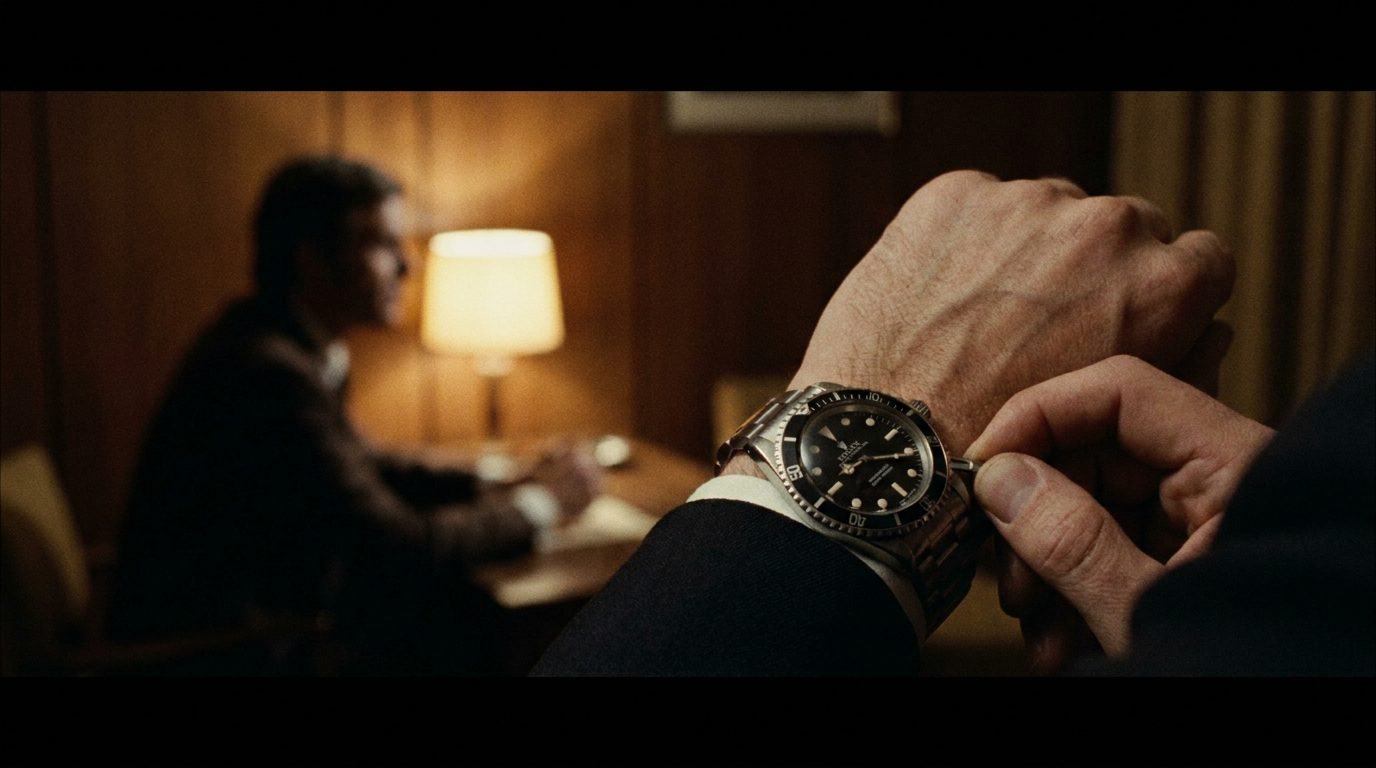
This regression is anchored in two primary pop-cultural and experiential archetypes. The first is the Christmas-Morning Archetype: the visceral memory of sitting under the Christmas tree, unwrapping toys, and experiencing a pure, non-utilitarian joy. The second is the James Bond Archetype. Internalized during childhood, the figure of James Bond—particularly Roger Moore wielding a gadget-equipped vintage Rolex Submariner in Live and Let Die (1973)—represents a foundational fantasy of technological competence, physical agency, and effortless masculine cool.
Bolt’s own lifetime obsession was ignited at age eleven by this very film, mesmerized by a Rolex that featured a miniature buzz saw to escape handcuffs and an ultra-powerful electromagnet to unzip a dress. Shortly after, Bolt’s father arrived in a Triumph Stag wearing a genuine Rolex, and gifted young Tom a simple Timex. Although Bolt knew his Timex “wasn’t quite the same,” its rotating bezel made it “good enough” for him to play his own James Bond fantasy, establishing the watch as a physical, childhood anchor. Later in life, mechanical watches served as a vital emotional bond and intergenerational connection between Bolt and his father during his father’s declining health. This underscores Bolt’s core tenet that timepieces function as intimate, physical archives of family continuity and personal history.
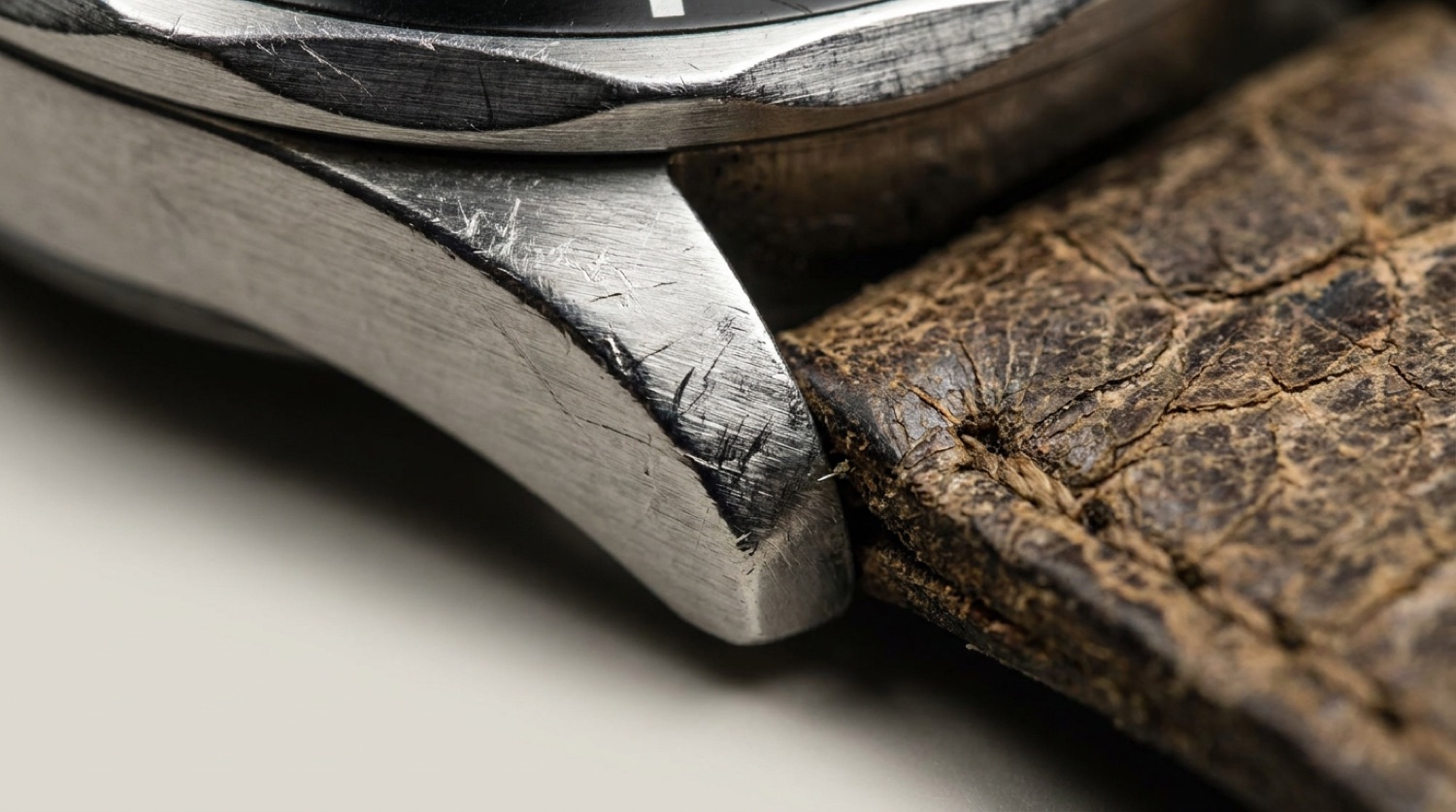
Under Hartmut Rosa’s sociological framework of social acceleration, modern subjects exist in a state of technological overstimulation and “frenetic standstill,” alienated by silent, frictionless digital screens. In this landscape, the mechanical wristwatch operates as a “resonant world-object” and a counter-technology. It is dense, tactile, and physically resistant. Winding the crown, rotating a bezel, or observing the sweeping second hand requires active human participation and provides immediate sensory and haptic feedback. This daily winding ritual carves out a repeatable, decelerated interval where time is experienced as responsive rather than merely passing, serving as a minor act of nervous self-regulation and psychological restoration.
The Dopaminergic Treadmill: “Wanting” versus “Liking”
To understand why collectors aggressively acquire mechanical watches independent of financial return, behavioral economics and neurobiology isolate the structural distinction between two neural pathways.
Incentive Salience (“Wanting”): Driven by dopamine pathways in the brain’s reward prediction error circuitry. Dopamine is the chemical of anticipation, motivation, and the hunt, spiking most intensely before a reward is secured. This “wanting” system is heavily stimulated by artificial scarcity, boutique waitlists, and high-stakes auction bidding.
Hedonic Impact (“Liking”): Modulated by separate opioid hotspots, this is the actual consummatory pleasure of ownership, daily wear, and integration.
As dopamine release terminates upon actual acquisition, the instant a watch is purchased, the brain experiences a brief hedonic drop. To recapture the neurochemical high, the collector’s brain projects its desire onto the next target, initiating a perpetual loop of acquisition—what Lacanian psychoanalysis defines as the search for the “Grail Watch” acting as objet petit (the unattainable object-cause of desire). The financial return is irrelevant; the true payout is the neurochemical currency of the chase.
Identity Work and the Freudian Ego Alibi
According to Russell Belk’s Extended Self theory, human beings systematically incorporate meaningful possessions into their personal identities through control, creation, deep historical knowledge, and active use. A watch worn directly on the skin functions as an identity prosthesis. The “feel-good factor” is the affective signature of this successful self-extension. The watch is not merely owned; in Belk’s terms, it is lived as part of who one is.
In the Freudian psychoanalytic view, the high-end mechanical watch serves as a compromise formation. The modern, desk-bound professional frequently operates in a highly administered, secure, and un-heroic corporate environment—creating an “unsatisfying reality.” By strapping on an over-engineered tool watch, the wearer engages in wish fulfillment, using the watch to symbolically escape and correct their safety-prone daily existence.
Furthermore, the brand provides the buyer’s Ego with an intellectual alibi: while the primal Id demands a massive status object to achieve dominance, the regulatory Superego rejects this as vulgar display. The brand’s marketing literature (focusing on “investment grade,” “heritage,” and “art”) resolves this tension, letting the buyer rationalize their status-seeking display as a disciplined, connoisseurial allocation of capital.
The market requires this emotional framework to function. It is a pursuit built on deep, resonant gratification that precedes any balance sheet. As Bolt concludes, “It’s a whole feel-good thing, however superficial that might feel.”
The Primal Urge to Collect
To the uninitiated observer, the modern watch market can appear to be an exercise in late-stage consumerist vanity—a superficial scramble for obsolete machinery. But to understand the true psychological engine of horology, one must look far beyond the boutiques of Geneva and the auction floors of today. The human drive to collect, curate, and accumulate personal ornaments predates writing, agriculture, and cities by tens of thousands of years. Collecting is not a modern commercial aberration; it is a deep-time biological and symbolic necessity.
The Archaeological Record: Deep-Time Curation
Archaeology shows how early this habit of personal ornament took hold. In Blombos Cave in South Africa, excavators uncovered small perforated shells of the Nassarius kraussianus species, dated to roughly 75,000 years ago. The holes were drilled with care, and many shells showed wear consistent with being strung and worn. Traces of red ochre suggest they were deliberately coloured. Christopher Henshilwood, who led the work, described the find in clear terms: personal ornaments such as these beads “incontrovertibly represent symbolically mediated modern behaviour.” Even at that distance, people were already using objects to signal something about themselves to others and, perhaps, to themselves. The shells were not tools for hunting or cooking. They were ways of making the body more legible within a group, of carrying memory or status in a portable form.
This behavior stretches even further into human antiquity. Perforated Nassarius gibbosulus shell beads have been recovered from Skhul Cave in Israel, dating to 100,000–135,000 years ago from strata containing eleven early Homo sapiens burials. This timeline is further corroborated by the discovery of 82,000-year-old shell beads in North Africa at Grotte des Pigeons in Taforalt, Morocco. Together, these discoveries establish that personal adornment was a pan-African and Near Eastern cognitive breakthrough that predates European Upper Paleolithic art by at least 40,000 years, proving that self-marking and accumulation are universal human traits.
By the Aurignacian period (approximately 30,000+ years ago), this deep-time behavior matured into a structured social technology. A pivotal study by Marian Vanhaeren and Francesco d’Errico analyzed the distribution of 157 distinct bead-type ornaments across 98 European Aurignacian sites. They discovered that the geographic clustering of bead types mapped directly onto distinct social and ethno-linguistic groups. Personal ornaments emerged as the components of material culture that best reflected human diversity and tribal boundaries—a mechanism of belonging and distinction that remains the fundamental architecture of watch collecting today.
Evolutionary Logic: From Furs to Calibers
The evolutionary transition from hoarding physical resources during the Pleistocene era to curating high-value luxury assets in the twenty-first century represents a profound shift in human survival mechanisms. In ancestral environments, the survival of early hominids depended on the rigorous, competitive accumulation of physical resources, such as animal furs, pelts, and food stores. This brutal survival pressure established deep-seated neurological reward pathways in the human brain, hardwiring the Id to seek satisfaction in gathering and owning as a direct metabolic fitness signal.
In modern, climate-controlled environments where basic material needs are easily met, these ancient evolutionary drives do not vanish; they are sublimated. Through this Freudian process, raw, aggressive, and competitive survival instincts are redirected into highly detailed, socially acceptable, and non-destructive pursuits. The modern “watch nerd” who obsessively categorizes millimeter case sizes, bezel fonts, and reference numbers is engaging in a sublimated hunt. The resulting collection, governed by the Ego, serves as symbolic capital—the ultimate trophy proving successful mastery over the modern corporate wilderness.
Costly Signaling and The Boardroom Peacock
To understand why this sublimated hunt centers on the mechanical watch, one must turn to evolutionary biology. Costly signaling theory, rooted in biologist Amotz Zahavi’s Handicap Principle (1975), supplies the biological backbone of this behavior. Zahavi demonstrated that for any biological signal to be reliable (honest) and resistant to deception, it must be wastefully expensive and difficult to maintain. Verbatim Zahavi: “in order to be effective, signals have to be reliable; in order to be reliable, signals have to be costly.” The canonical example is the male peacock’s heavy, bright tail: it drains energy and dramatically increases predation risk, meaning only a genetically superior, robust male can afford to carry such a deliberate handicap.
A mechanical watch is the human peacock tail. It is objectively less accurate than a cheap digital screen, fragile, and demanding of endless, expensive servicing. By spending a massive financial premium on an obsolete mechanical machine, the collector signals pecuniary strength and cognitive surplus. Its very handicap—no atomic accuracy, endless servicing, vulnerability to shock—guarantees honesty. Only an individual with a vast abundance of excess resources can afford to absorb such a visible burden, meaning lower-quality alternatives (such as mass-produced quartz) simply cannot fake the cost. During the Quartz Crisis, anomalies like Paul Newman exotics or AP Royal Oak khanjars operated as specialized handicaps that only high-quality “phenotypes” (brands with rich heritage) could afford to display.
Evolutionary anthropologist Kristen Hawkes extended this concept to human “show-off” displays, demonstrating that these signals function not only for attracting mates but for establishing coalitional rank and signaling dominance within male-dominated hierarchies. Collectors compete invidiously with one another through increasingly rare, unpolished, and historically complex references.
The Material Autobiography and Immortality Projects
Beneath the competitive display of the handicap lies a deeper, existential dimension. According to Russell Belk’s “Extended Self” theory, human beings do not treat possessions as purely external. Instead, they incorporate them directly into their identities through continuous control, creation, and deep knowledge. Collecting represents the most intense form of this identity work. Rather than accumulating random commodities, the collector carefully curates an organized, narrative-driven system of objects that serves as a “material autobiography.” In horology, this is highly pronounced: a curated collection of vintage watches physically records and externalizes the collector’s personal timeline, taste evolution, and memory milestones.
Ultimately, this accumulation touches upon the most profound human anxiety. In cultural anthropology, Ernest Becker’s The Denial of Death (1973) argued that human behavior is fundamentally driven by a subconscious terror of mortality. To soothe this existential anxiety, humans construct “Immortality Projects”—empires, art, or collections designed to survive their physical bodies.
The mechanical watch is one of the few consumer objects explicitly engineered to operate and outlive its owner. When a collector obsessively secures and maintains a mechanical watch, they are participating in a miniature immortality project. This psychological defense is masterfully commercialized by Patek Philippe’s famous campaign—“You never actually own a Patek Philippe. You merely look after it for the next generation”—which sells the comforting, ego-soothing illusion that a fragment of the owner’s identity will survive the grave. The primal urge to collect is not merely a desire to own; it is the ancient, deeply human instinct to endure.
Camaraderie and the Collector Circle
On a humid afternoon in June 1907, nearly two hundred men in fine suits and matching straw sombreros gathered on the banks of the Atibaia River outside Rio de Janeiro for a picnic that lasted three hours. They belonged to the Sociedade Concórdia, a club organised through the retailer Gondolo & Labouriau for owners of Patek Philippe watches. A photograph still exists: the men arranged in rows, some standing with hands clasped, others seated on the grass, the river moving behind them. What the picture makes plain is that these watches were not being considered in private. They were part of the occasion itself, worn on wrists and talked about among people who knew the same references and cared about the same details.
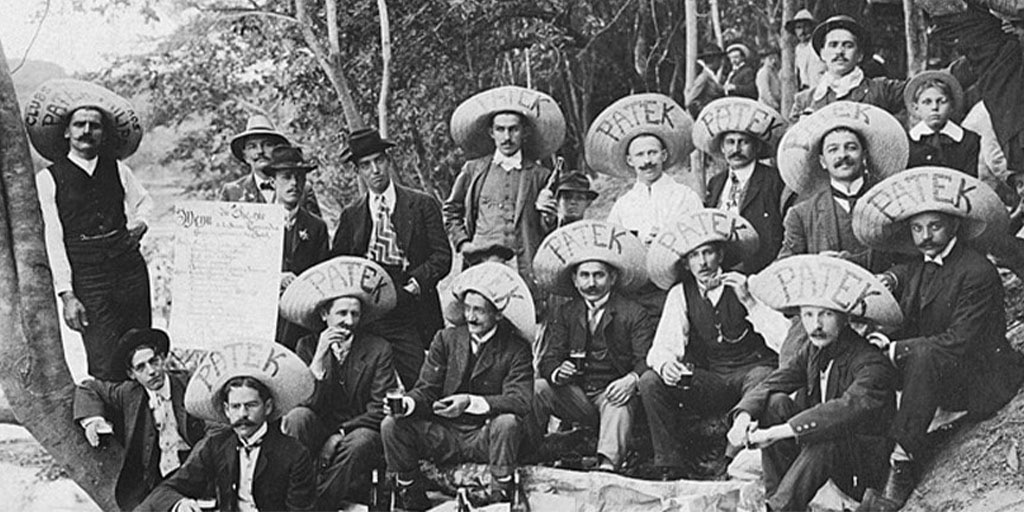
That instinct to gather with others who share the fascination has not faded. Bolt speaks of it as one of the lasting rewards of the pursuit: “You meet like-minded people, and you get into this sort of collector circle.” He connects the habit to something older still: the simple pleasure of being around people who understand why an object matters. The circle gives the private act of choosing and keeping a watch a place where it can be shown, examined, and enjoyed in company. It turns ownership into a conversation that can be returned to over months and years.
This social dimension has taken many forms across time. In the nineteenth century, immigrant watchmakers in New York formed the Deutscher Uhrmacher Verein, later known as the Horological Society of New York. What began as a guild offering practical support and fellowship evolved into an institution dedicated to teaching and preserving knowledge. The impulse was the same: people who worked with watches found value in meeting others who spoke the same language and faced the same challenges.
To map the physical social infrastructure of this world is to trace the rise of the RedBar Group. Co-founded in 2007 by Adam Craniotes and Dr. Jeffrey Jacques, the group began as a thoroughly informal, private meetup of watch enthusiasts in a midtown Manhattan bar. Over the next two decades, operating under the sharp executive leadership of CEO Kathleen McGivney, RedBar achieved extraordinary scale, expanding into a formalized international collective. By 2026, the organization has grown to 40 chapters spread across four continents, encompassing over 3,000 active members. Regional chapters are securely anchored in major global metropolitan and financial hubs, including New York, London, Dubai, Tokyo, and Bombay.
The core operational model of RedBar is deceptively simple yet sociologically revolutionary for a luxury sector: its weekly or monthly in-person gatherings are strictly judgment-free and entirely collection-size-blind. The collective operates on the unyielding, foundational principle that everyone is on equal footing, regardless of the pieces they own or how large their bank accounts are. This decentralized chapter structure does something luxury conglomerates historically struggled to achieve: it smoothly bridges the gap between independent, grassroots collectors and elite luxury watch brands, providing a non-commercial, relationship-driven ecosystem of peer validation that sustains and justifies the entire collector’s journey.
This physical social network is heavily reinforced by the Windup Watch Fair, an open-door horological exhibition first established in 2015. Specifically engineered to bypass the traditional VIP gatekeeping, high financial barriers, and often sterile, alienating environments of mainstream commercial watch boutiques, the Windup Watch Fair serves as a direct-to-consumer platform for the grassroots watch community. The commercial scale and public demand of this open-door model are illustrated by its rapid, multi-city expansion. By 2024, the Windup Watch Fair in New York City drew over 10,000 attendees and featured more than 150 participating brands. The historic 10th-anniversary edition of the New York City fair in 2025 further solidified this growth trajectory, achieving a record-breaking attendance of over 11,000 horological enthusiasts.
The contemporary social fabric of these circles is brilliantly modeled by French sociologist Michel Maffesoli’s concept of neo-tribalism. Maffesoli’s framework demonstrates that postmodern societies are characterized by the resurgence of fluid, affectual micro-communities—or “neo-tribes”—bound together by shared tastes, lifestyles, sensations, and aesthetic consumer practices rather than traditional class or demographic boundaries. The evolution of these horological neo-tribes is historically delineated by three distinct developmental phases.
The Forum Phase (Late 1990s–Early 2000s) saw the initial digitalization of localized collector circles on early web-based forums such as TimeZone and PuristSPro. These platforms created the first borderless communities focused on historical provenance and mechanical connoisseurship.
The Instagram Phase (2010s) saw social media platforms visually fragment the watch world into highly specific, fiercely defended digital tribes organized around specialized aesthetic codes. Collectors segregated into the Vintage Tool-Watch Tribe (obsessing over faded tropical bezels, original tritium paint decay, and military serial numbers), the Grand Seiko Tribe (obsessing over Japanese nature-inspired dials and mirror-finished “Zaratsu” polishing), and the Independent Watchmaking Tribe (seeking obscure, low-production hand-finished calibers).
The Integration Phase (2020s) saw digital tribalism transition back into formalized, physical camaraderie through manufacturer-sanctioned events, brand-led clubhouses, and global collector summits such as Dubai Watch Week.
To understand the internal financial mechanics of the watch market, one must realize how these circles successfully convert camaraderie into sustained, inelastic demand. The primary mechanism driving this engine is the circulation and accumulation of emotional capital—the affective resources, shared sensations, and relational intensities that bind the micro-community together. Individual emotional attachment to an obsolete mechanical object is systematically converted into collective emotional capital through shared tribal rituals (such as “watch and tell” winding sessions and group auction pilgrimages), aesthetic communion (shared sensory appreciation of hand-polished anglage or the acoustic tone of an escapement), and emotional recognition.
When a collector’s private attachment to a specific timepiece is affirmed and validated by a peer group of initiates, the “buzz” of ownership is amplified. Belonging within these circles is governed by Pierre Bourdieu’s framework of cultural capital and Sarah Thornton’s concept of subcultural capital. True entry is never achieved merely by the transaction of buying a luxury watch; instead, the collector must demonstrate intense competence in the tribe’s specific subcultural capital—namely, the esoteric knowledge required to authenticate, contextualize, and narrate the historical and technical significance of the object.
Because these objects are chased and purchased specifically to satisfy peer validation and establish rank within an insulated, homosocial male ecosystem, their economic value becomes highly inelastic and remarkably insulated from broader macroeconomic logic or traditional asset drawdowns.
This insular demand trajectory aligns directly with broader identity preservation tactics. As modern masculine identity has transitioned from a historical, production-centered model to one established, communicated, and validated through specific consumption practices and personal aesthetics, the mechanical watch has been positioned as the ultimate “membership card” into these highly valued networks.
Consequently, the substantial financial expenditure required to enter a high-tier horological tribe is never viewed by the initiate as a simple retail expense; instead, it is rationalized as a necessary, completely logical investment in social identity, peer camaraderie, and symbolic distinction. The collector circle is not merely a byproduct of the watch market; it is the vital, self-sustaining engine that keeps the ecosystem alive.